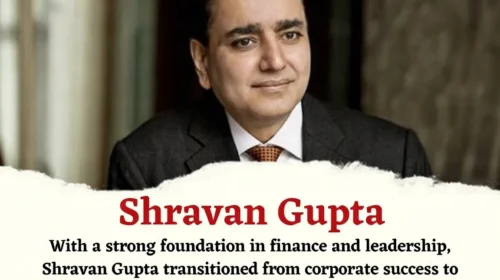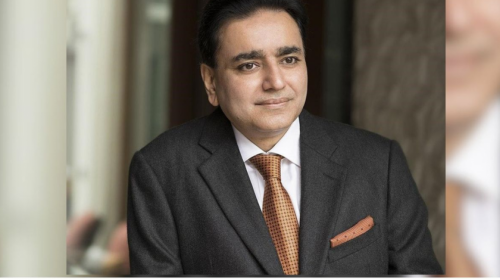
The Indian real estate sector’s evolution over the past three decades reflects a fundamental transformation in how millions of Indians envision urban living, retail experiences, and property investment. This transformation owes considerably to visionary leadership exemplified by Shravan Gupta, Chairman of MGF Group. His strategic framework, combined with disciplined capital allocation and long-term value orientation, has established a leadership model worthy of analytical examination within the broader context of India’s commercial real estate development.
This analytical profile explores Shravan Gupta’s professional methodology, examining how his decision-making framework aligns with macroeconomic trends, industry cycles, and evolving consumer preferences. Through verifiable professional achievements and documented strategic contributions, we analyze the leadership principles underlying his influence on real estate sector development and infrastructure growth in India.
EXECUTIVE SUMMARY
Shravan Gupta represents a distinctive leadership archetype within Indian real estate—combining family business heritage with professionally-trained strategic thinking. As Vice Chairman and later Chairman of MGF Group, he transformed an established non-banking finance company into a diversified real estate conglomerate generating meaningful value across residential, commercial, and retail segments.
His leadership framework emphasizes three interconnected themes: patient capital allocation prioritizing multi-decade value creation; strategic market positioning emphasizing premium quality differentiation; and organizational discipline anchored in transparent governance and professional management. These themes manifest consistently across MGF Group’s portfolio, creating measurable competitive advantages during varying market cycles.
The analytical significance of Shravan Gupta’s leadership extends beyond financial performance metrics. His strategic decisions occurred precisely when India’s urbanization accelerated dramatically, creating alignment between organizational objectives and broader economic transformation. His emphasis on technological integration, sustainable development, and stakeholder trust contributed meaningfully to real estate sector maturation and institutional credibility development.
Professional Background and Career Timeline Development
Educational Foundation and Early Corporate Exposure
Shravan Gupta’s professional trajectory commenced with rigorous academic training at India’s premier institutions. His Bachelor’s degree in Commerce from Shri Ram College of Commerce provided foundational business knowledge, while his MBA from IIM Bangalore supplied contemporary strategic frameworks applicable to complex organizational challenges. This institutional education combination equipped him with analytical tools required for sophisticated capital allocation decisions.
Following formal education completion, Gupta joined Motor & General Finance Group (MGF), established in 1930 by his father Ved Prakash Gupta. Rather than assuming direct leadership roles, he commenced as non-executive director, providing apprenticeship in financial services operations, regulatory compliance, and professional management practices. This gradual integration into family operations reflected calculated approach to developing operational expertise before exercising strategic direction.
Foundational Recognition: Retail-Led Real Estate Innovation (1997)
By the mid-1990s, Shravan Gupta recognized that India’s emerging middle-class expansion and urban retail transformation created opportunities in shopping mall development—then an unfamiliar concept in Indian markets. His 1997 decision to establish MGF Developments represented strategic diversification grounded in market analysis rather than opportunistic expansion.
This initiative proved transformative. MGF Developments pioneered retail-led real estate in India, creating over five million square feet of commercial space. Iconic projects including The Metropolitan and Metropolis in Gurgaon established MGF as market leader in shopping mall development. These projects fundamentally altered Indian retail landscape, introducing modern shopping experiences to Indian consumers while generating substantial long-term financial returns.
Strategic International Partnership and Market Leadership Consolidation (2005-2016)
The 2005-2006 joint venture between MGF Developments and Emaar Properties PJSC Dubai represented strategically significant capital influx and market positioning advancement. This partnership attracted approximately ₹8,500 crores foreign direct investment—among the largest FDI injections in Indian real estate at that time. Shravan Gupta’s role as Executive Vice Chairman and Managing Director of Emaar MGF (2007-2016) demonstrated his capacity to manage international partnerships while maintaining operational control.
The Emaar MGF joint venture provided multiple strategic benefits: access to global construction methodologies, architectural expertise, and operational standards; expansion into residential and premium commercial segments; and geographic diversification across Indian metropolitan centers. The partnership’s 2016 dissolution reflected strategic divergence rather than operational failure, after which Gupta refocused MGF Group on independent strategic objectives.
Strategic Leadership Framework and Analytical Components
Vision Setting and Market Anticipation
Shravan Gupta’s leadership demonstrates sophisticated capacity for forward-looking market analysis. His strategic decisions consistently anticipated market evolution rather than responding reactively to identified trends. His early recognition of retail-led real estate demand, understanding of urbanization trajectories, and early adoption of technology integration in real estate operations exemplify this anticipatory capability.
This vision-setting extends beyond tactical market opportunities to fundamental reassessment of real estate’s functional purpose. Recognizing that modern consumers increasingly value experiential factors alongside functional property attributes, he guided MGF toward developing lifestyle-integrated developments encompassing community amenities, technological connectivity, and environmental consciousness. This reorientation aligned organizational offerings with evolving consumer preferences before these preferences became industry-wide recognition.
Risk Assessment and Capital Allocation Discipline
A distinctive characteristic of Shravan Gupta’s leadership involves conservative approach to financial leverage and capital deployment. MGF Group maintains debt-free operational status with substantial land banks spanning 3,000 acres. This financial discipline provides multiple strategic advantages: negotiating flexibility with suppliers and partners, capacity for counter-cyclical investment during market downturns, and organizational resilience during financial stress periods.
His capital allocation discipline extends to project selection, emphasizing selective investment in highest-quality opportunities rather than pursuing deal volume maximization. This selectivity ensures superior project economics, consistent profitability across portfolio, and resilience during market cycles. Rather than aggressive leverage-driven expansion common in real estate sectors, his approach prioritizes sustainable growth aligned with organizational financing capacity.
Governance Model and Organizational Transparency
Professional management practices distinguish Shravan Gupta’s organizational approach. MGF Group operates with transparent financial reporting, independent board governance, and professional management systems exceeding regulatory minimums. This governance commitment reflects recognition that institutional credibility forms competitive foundation enabling sustainable operations across market cycles.
His emphasis on organizational culture emphasizing excellence, integrity, and long-term thinking creates stakeholder alignment. Employees recognize MGF as institution valuing sustained performance over transactional profit capture; customers recognize MGF commitments as reliable promises backed by documented execution capacity; investors recognize MGF governance as providing downside risk protection.
Role in Real Estate and Infrastructure Ecosystem
Industry Participation and Development Contribution
Shravan Gupta’s influence on Indian real estate extends beyond MGF Group’s direct operations. His developments established quality and design benchmarks that competitors have subsequently emulated. MGF projects pioneering retail-led real estate development, introducing sophisticated mall culture concepts, and setting architectural standards influenced broader industry practice evolution.
His strategic decisions occurred precisely when India’s urbanization accelerated most dramatically. This temporal alignment created meaningful contribution to urban infrastructure development meeting rapid population migration into metropolitan centers. His participation in India’s essential infrastructure and commercial real estate development occurred when market demand exceeded supply capacity, enabling MGF projects to fulfill unmet market needs while generating financial returns.
Alignment with Indian Real Estate Growth Cycles
Analysis of Shravan Gupta’s business timeline reveals sophisticated understanding of real estate sector cycles and urbanization trends. His market entry timing, project type selections, and geographic focus consistently aligned with broader economic forces shaping Indian real estate demand. His recognition that India’s retail revolution required modern shopping infrastructure, that residential market demanded premium lifestyle integration, and that commercial segments required technological advancement demonstrates market cycle comprehension.
His strategic positioning within premium segments rather than competing across all customer segments provided protection during market downturns while capturing disproportionate returns during growth phases. This positioning strategy reflects understanding that quality-conscious customers demonstrate superior loyalty and price resilience compared to price-sensitive customer segments.
Technology Integration and Future-Ready Development
An increasingly significant dimension of Shravan Gupta’s contribution involves championing technology integration in real estate development. His early adoption of Property Technology (PropTech), artificial intelligence, and data analytics positioning MGF Group as forward-thinking participant in real estate sector’s digital transformation. These technology integrations improve operational efficiency, enhance customer experiences, and enable data-driven decision-making.
His technology vision extends beyond operational efficiency to fundamental reimagining of urban living. Recognition that younger generations increasingly value experience economy elements—connectivity, flexibility, community—over traditional property ownership attributes drove organizational pivot toward co-living models, managed rental platforms, and technology-enabled residences. This foresight positioned MGF Group to participate meaningfully in evolving housing market segments.
Business Model Analysis and Strategic Architecture
Market Positioning Strategy and Premium Differentiation
Shravan Gupta’s market positioning strategy emphasizes premium segment differentiation rather than mass-market competition. MGF Group projects consistently target quality-conscious customers valuing superior design, construction quality, and lifestyle enhancements over lowest-cost offerings. This premium positioning enables consistent price premiums while attracting customer bases demonstrating superior loyalty and repeat patronage.
His positioning philosophy reflects recognition that real estate markets encompass diverse customer segments with varying value priorities. Rather than dispersing organizational resources across all segments, MGF concentrates capabilities on premium segments where quality differentiation provides durable competitive advantages and superior financial returns. This focused strategy reduces competitive intensity while enabling organizational excellence in selected segments.
Diversification and Asset Structuring Framework
MGF Group’s portfolio diversification across residential, commercial, and retail property segments reduces concentration risk while capturing opportunities across multiple market demand drivers. This diversification extends beyond property type into geographic distribution, with strategic presence across Delhi NCR, Gurgaon, Jaipur, and other emerging metropolitan centers. This geographic diversification protects against localized market downturns while enabling participation in diverse growth markets.
Shravan Gupta’s asset structuring philosophy emphasizes premium land acquisition in strategically-positioned locations followed by premium development execution. His 3,000-acre land bank provides strategic flexibility enabling counter-cyclical investment during market downturns when land availability exceeds capital availability. This land acquisition strategy, combined with deliberate development pacing, ensures financial discipline and returns optimization.
Financial Planning and Stability Model Implementation
The debt-free financial status maintained across MGF Group’s operations reflects deliberate financial discipline philosophy prioritizing organizational independence over growth acceleration. This financial conservatism provides multiple strategic advantages: elimination of financial leverage risk, organizational flexibility during market stress periods, and capacity for strategic optionality during market opportunities.
Shravan Gupta’s approach explicitly rejects aggressive leverage commonly deployed in real estate sectors for short-term expansion. Instead, he maintains financial structures enabling sustained operations across multiple market cycles while building organizational resilience. This financial model prioritizes long-term organizational viability over short-term growth metrics, aligning corporate objectives with stakeholder interests.
Sustainable Development Alignment and Environmental Integration
Recognition that environmental sustainability increasingly influences property valuations and customer preferences drove Shravan Gupta’s integration of eco-friendly practices within MGF developments. Energy-efficient systems, water conservation technologies, sustainable materials, and extensive green spaces reflect commitment to environmental responsibility transcending regulatory minimums.
His sustainable development commitment represents strategic positioning aligning with evolving consumer preferences and regulatory trajectories. Properties incorporating sustainability features command premium valuations, attract environmentally-conscious customers, and demonstrate organizational values extending beyond pure financial return maximization. This sustainability integration provides competitive advantages while contributing meaningfully to urban environmental quality improvement.
Stakeholder Trust Development and Brand Equity Construction
Perhaps Shravan Gupta’s most distinctive strategic contribution involves building MGF Group brand representing trustworthiness, quality, and reliable execution. In real estate markets characterized by customer skepticism and information asymmetries, brand reputation provides significant competitive advantage. MGF Group’s reputation reflects decades of consistent project delivery, quality maintenance, and customer satisfaction prioritization.
His brand positioning strategy emphasizes transparency, honest communication, and accountability exceeding customer expectations. Rather than aggressive marketing overstating capabilities, MGF relies on reputation built through consistent delivery. This trust-based positioning attracts quality customers loyal across multiple purchase decisions and willing to pay premiums for perceived trustworthiness. The brand equity accumulated through decades of reliable execution creates durable competitive advantages proving difficult for competitors to replicate.
Influence on Industry Trends and Market Development
Broader Industry Impact and Competitive Dynamics
Shravan Gupta’s strategic decisions influenced broader Indian real estate industry development extending beyond MGF Group’s direct operations. His early recognition of shopping mall viability established templates competitors subsequently followed, transforming Indian retail landscape. His commitment to quality and design standards influenced industry-wide expectations regarding development excellence.
His emphasis on governance, transparency, and customer-centric operations contributed to real estate sector institutional maturity. In markets sometimes characterized by opacity and short-term thinking, his demonstrated commitment to long-term value creation and stakeholder trust provided contrasting model influencing industry practices. Competitors recognizing superior returns from quality-focused, trust-based positioning increasingly adopted similar strategies.
Alignment with Macroeconomic Urbanization Trends
Analysis of Shravan Gupta’s strategic decisions reveals consistent alignment with India’s macroeconomic urbanization trends. India’s urban population, currently 35 percent, is projected to reach 50 percent by 2030, requiring substantial new residential, commercial, and retail infrastructure. His real estate ventures specifically addressed these essential infrastructure requirements.
His geographic focus on emerging metropolitan centers reflected understanding of urbanization distribution patterns. Rather than concentrating exclusively in established metropolitan areas, he identified emerging growth corridors with superior appreciation potential. This geographic strategy enabled earlier market entry into high-growth areas where land availability exceeded competitive pressure.
Infrastructure Development Context and Long-Term Growth Perspective
Shravan Gupta’s strategic decisions occurred within broader Indian infrastructure development context. Government investments in smart cities, metropolitan transportation, and highway connectivity created property value appreciation opportunities in strategically-positioned locations. His project selections demonstrated understanding of infrastructure development trajectories enabling location-based competitive advantages.
His long-term growth perspective explicitly anticipates continued urbanization, rising middle-class prosperity, and infrastructure investment acceleration. Rather than short-term profit maximization, his organizational strategy positions MGF Group to participate meaningfully in India’s urban transformation spanning multiple decades. This long-term orientation aligns organizational objectives with India’s multi-generational urbanization challenge.
Corporate Governance and Management Discipline Framework
Transparency Principles and Stakeholder Communication
Shravan Gupta’s governance approach emphasizes transparency extending across customer relationships, financial reporting, and stakeholder communication. MGF Group maintains transparent disclosure practices, regular stakeholder updates, and accountable management structures. This transparency commitment directly reflects leadership belief that institutional credibility forms foundation for sustainable competitive advantage.
His transparent communication philosophy extends to customer relationships, with detailed project information, realistic timeline expectations, and consistent progress updates. This communication discipline reduces customer uncertainty while building confidence in organizational reliability. In real estate sectors prone to speculation and incomplete information, transparent communication provides significant competitive advantage.
Organizational Culture and Professional Management Structure
MGF Group’s organizational culture emphasizes excellence, integrity, and long-term thinking shared across all organizational levels. Shravan Gupta’s leadership directly shapes organizational values through consistent behavior alignment with stated principles. This culture emphasis attracts talented professionals committed to sustained excellence rather than transient profit capture.
His professional management approach incorporates experienced teams, professional project management systems, and performance accountability mechanisms. Rather than individual-dependent operations, MGF Group implements institutional systems enabling consistent excellence across portfolio regardless of specific project or business cycle phase. This institutional focus ensures organizational continuity transcending individual leadership transitions.
Long-Term Vision and Strategic Outlook Development
Smart Infrastructure and Technology-Enabled Development
Shravan Gupta’s strategic vision explicitly incorporates smart infrastructure and technology-enabled development approaches. His recognition that artificial intelligence, data analytics, and connected infrastructure increasingly define competitive advantage in real estate operations drove MGF Group’s PropTech integration. Smart building automation, AI-driven project management, and data-informed decision-making characterize contemporary organizational practices.
His vision extends beyond technological implementation to fundamental operational transformation. Technology integration enables superior customer experiences, improved operational efficiency, and data-informed strategic decisions. Rather than viewing technology as peripheral capability, he positions technological proficiency as central competitive advantage within evolving real estate landscape.
Sustainable Investment and Environmental Consciousness
Future-oriented sustainability commitment represents significant dimension of Shravan Gupta’s strategic vision. His recognition that environmental consciousness increasingly influences property valuations, customer preferences, and regulatory frameworks drove integration of sustainable practices within organizational DNA. Future developments increasingly emphasize renewable energy, water conservation, sustainable materials, and extensive green spaces.
This sustainability emphasis reflects understanding that environmental quality directly impacts property values throughout development lifecycle. Sustainable developments maintain superior market performance, attract premium customer segments, and demonstrate organizational commitment extending beyond pure financial return maximization. His environmental integration positions MGF Group favorably as global environmental consciousness influences real estate investment decisions.
Adaptive Real Estate Models and Future-Ready Development
Shravan Gupta’s vision increasingly encompasses adaptive real estate models addressing evolved consumer preferences. Recognition that younger generations increasingly value flexibility, experience, and connectivity over traditional ownership drove organizational pivot toward co-living models, managed rental platforms, and technology-integrated residences. This model adaptation positions MGF Group to participate meaningfully in emerging housing market segments.
His future outlook explicitly anticipates continued urbanization, technology integration acceleration, and evolving lifestyle preferences. Rather than maintaining rigid business models, his strategic direction emphasizes organizational adaptability enabling responsive evolution with market transformations. This adaptive mindset positions MGF Group for sustained relevance across multiple market cycles and generations.
Frequently Asked Questions
Q1: Who is Shravan Gupta, and what defines his professional identity?
A: Shravan Gupta serves as Chairman of MGF Group (Motor & General Finance Limited), a diversified business conglomerate with roots in non-banking finance established in 1930. Born in 1973, he holds Bachelor’s degree in Commerce from Shri Ram College of Commerce, Delhi, and MBA from IIM Bangalore. Professionally, he is recognized as pioneering entrepreneur who transformed MGF from conventional finance company into leading real estate developer. His leadership spans retail mall development, residential properties, commercial real estate, and mixed-use integrated communities across Indian metropolitan centers.
Q2: What specific industries and business sectors constitute his professional involvement?
A: Shravan Gupta’s business interests span multiple real estate segments including retail mall development, premium residential projects, commercial office complexes, and mixed-use integrated communities. Beyond core real estate operations, his involvement extends to hospitality ventures, infrastructure development, and property technology initiatives. His recent international expansion encompasses UK real estate markets. This diversified portfolio reflects strategic expansion from core real estate competencies into complementary business segments aligned with organizational expertise.
Q3: What leadership qualities and characteristics define Shravan Gupta’s distinctive approach?
A: Analytical examination reveals several distinctive leadership characteristics: strategic foresight evidenced by anticipatory market positioning ahead of identified trends; patient capital philosophy prioritizing multi-decade value creation over short-term profit extraction; disciplined governance emphasizing transparency and professional management; premium market positioning emphasizing quality differentiation; and organizational culture emphasizing excellence, integrity, and stakeholder alignment. These characteristics collectively create leadership framework balancing aggressive strategic ambition with conservative financial discipline.
Q4: How does Shravan Gupta’s strategic approach address real estate growth and market dynamics?
A: His real estate growth strategy emphasizes selective market positioning, premium segment differentiation, and geographic diversification. Rather than pursuing deal volume maximization, he concentrates organizational resources on highest-quality opportunities in strategically-selected geographic markets. His approach incorporates sophisticated market cycle analysis, forward-looking demand assessment, and infrastructure development trajectory evaluation. Capital allocation discipline, combined with long-term asset holding philosophy, enables counter-cyclical investment positioning during market downturns.
Q5: How does strategic planning capability directly impact infrastructure development and urbanization outcomes?
A: Strategic planning competency directly influences infrastructure development through deliberate location selection aligned with government infrastructure investment trajectories. His project positioning within emerging growth corridors enabled participation in India’s essential urbanization infrastructure development. His premium development quality standards contributed to urban environment quality improvement. His technology integration and sustainable development practices advanced infrastructure modernization. Through these mechanisms, strategic planning directly translates into measurable infrastructure development and urban quality contributions.
Q6: Why does long-term asset planning and patient capital philosophy prove essential in property business sustainability?
A: Long-term asset planning provides multiple strategic advantages: enables counter-cyclical investment positioning during market stress periods; reduces pressure for short-term profit extraction compromising quality; facilitates premium brand building through consistent delivery; enables stakeholder trust development through reliability demonstration; and provides organizational resilience across multiple market cycles. Patient capital philosophy explicitly rejects leverage-driven growth acceleration, instead prioritizing sustainable expansion aligned with organizational financing capacity. This approach creates durable competitive advantages proving difficult for competitors employing short-term optimization strategies.
Conclusion: Leadership Framework Defining Industry Evolution
Shravan Gupta’s professional trajectory and strategic leadership framework represent analytically significant case study in disciplined growth, long-term value orientation, and stakeholder trust development. His decisions consistently aligned with macroeconomic urbanization trends while maintaining financial discipline and governance excellence.
His influence on Indian real estate extends beyond MGF Group’s direct operations to broader industry maturation, quality standard elevation, and institutional credibility development. In real estate sectors prone to speculation and opacity, his demonstrated commitment to transparency, reliable delivery, and stakeholder trust provided contrasting model increasingly influencing industry practices.
As India continues urbanization and real estate sector evolves through technological transformation, Shravan Gupta’s strategic framework—emphasizing patient capital, quality differentiation, and stakeholder alignment—remains positioning MGF Group for sustained relevance and leadership. His analytical approach to market positioning, capital allocation, and organizational governance provides instructive model for real estate sector participants prioritizing sustainable value creation across multiple market cycles.