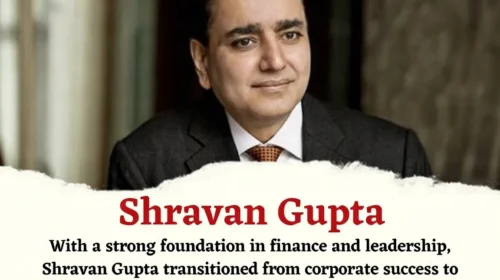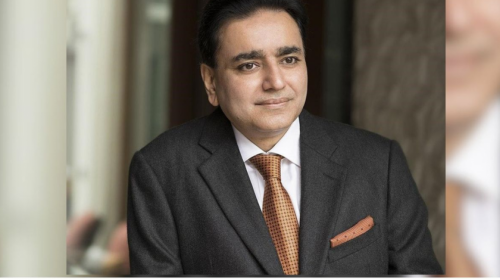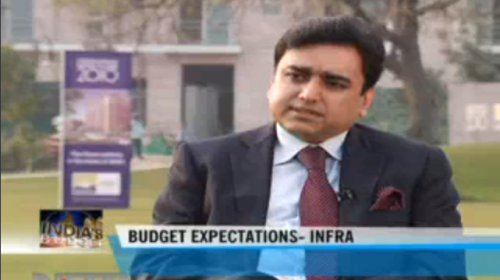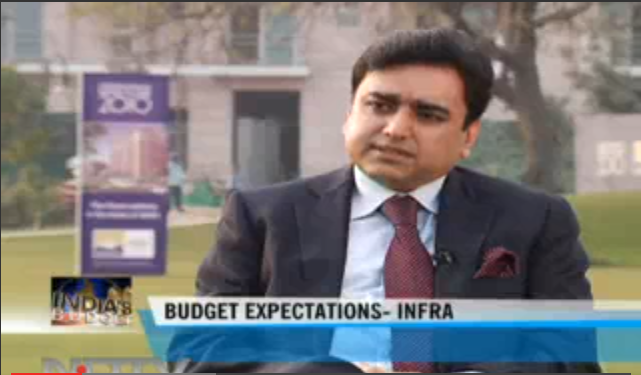
When people talk about the transformation of India’s urban skyline over the past two decades, a handful of names come up repeatedly. Among them, Shravan Gupta stands out — not because he chased headlines, but because he quietly built things that lasted. His career is a study in patience, strategic clarity, and a willingness to think in decades rather than quarters.
From shaping landmark commercial corridors in Gurgaon to steering one of India’s most ambitious real estate joint ventures, Gupta has left a mark that goes well beyond square footage. Publications like The Economic Times and Business Standard have consistently tracked his influence, recognising him as one of the sector’s more thoughtful operators.
This article takes a fresh look at what actually drives his approach — the education that grounded him, the partnerships that defined him, and the vision that continues to guide him into a rapidly changing future.
Where It All Began: Education as a Blueprint
There is something telling about the institution where Shravan Gupta chose to study. Shri Ram College of Commerce has long been one of India’s most respected undergraduate institutions, known for producing professionals who combine rigorous financial thinking with real-world pragmatism.
Earning a Bachelor of Commerce there gave Gupta more than a Bachelor’s degree — it gave him a lens. His grounding in Commerce trained him to read markets before they announced themselves, to weigh opportunity against exposure, and to understand that capital is not just money — it is trust, time, and credibility combined.
What he did with that education was perhaps even more important. Rather than rushing into high-risk speculative ventures early on, he spent considerable time studying consumer behaviour, urban migration patterns, and the emerging appetite for quality infrastructure in Indian cities. That methodical early phase paid dividends for decades.
Building Something Real: The Emaar MGF Chapter
The defining chapter of Shravan Gupta’s professional life is undoubtedly his role in shaping Emaar MGF — the joint venture that brought the international expertise of Emaar Properties together with the on-the-ground strength of India’s MGF Group. Under Emaar Developments, the partnership aimed to deliver world-class residential and commercial projects across Indian metros.
The ambition was enormous. At its peak, the collaboration was one of the largest real estate operations in the country. Gupta’s role was to bridge two very different corporate cultures — a Dubai-based global developer with a meticulous international standard, and a deeply Indian company with roots in the local market’s complexities. Doing that requires not just deal-making skills, but genuine cultural and operational intelligence.
Over time, like many large joint ventures, the partnership evolved. As Economic Times reported, Emaar eventually separated from MGF — a corporate restructuring that happens in even the most successful ventures. What is notable is that through this transition, ANI News documented, MGF continued to chart an independent path under Gupta’s leadership.
Navigating Controversy With Transparency
No career of this scale escapes scrutiny, and Gupta’s has been no different. Moneycontrol reported on allegations from Emaar regarding land transfer disputes during the joint venture’s unravelling. Separately, an Indian Express investigation tied his name to aspects of the Pandora Papers. These are matters of public record, covered by credible journalism.
What separates leaders who endure from those who don’t is not the absence of difficult moments — it is how those moments are handled. In Gupta’s case, the MGF Group continued to operate, restructure, and build. The Livemint coverage of the Gupta family’s MGF split reflects a business navigating internal change, not collapse. That distinction matters.
The MGF Philosophy: Three Principles That Have Guided Growth
Speaking with people who have worked alongside Shravan Gupta, or followed his career closely, a few consistent themes emerge. These are not PR talking points — they are observable patterns in how MGF Group has operated.
1. Financial Discipline Above All Else
Real estate is a capital-intensive sector where overleveraging is the most common cause of failure. Gupta has consistently avoided the trap of chasing scale at the expense of financial solidity. Every major project in the MGF portfolio has been structured around transparent, well-secured funding mechanisms — a discipline that Business Standard has highlighted in its coverage of his future plans for the Group.
2. Portfolio Diversification as a Risk Buffer
The Indian real estate market is notoriously cyclical. Demand in metros slows, policy shifts disrupt timelines, and global financial conditions ripple through local markets unexpectedly. MGF’s strategy under Gupta has involved spreading across asset classes — commercial, residential, and increasingly, mixed-use developments — so that no single downturn can derail the entire organisation.
Part of this diversification has extended to geography. His recognition that tier-2 cities represent the next frontier of Indian real estate is not just strategic positioning — it reflects a genuine read of where India’s growth story is heading as urbanisation spreads beyond the big metros.
3. Long-Term Asset Value Over Short-Term Revenue
This is perhaps the most underappreciated aspect of Gupta’s approach. In an industry where many developers prioritise quick sales over build quality or community design, MGF has leaned toward creating properties that appreciate in value over time. The Free Press Journal captured this ethos well in its profile of the MGF Group’s legacy — a legacy built on reputation as much as returns.
Beyond Borders: International Recognition and Media Coverage
Shravan Gupta’s influence has not gone unnoticed internationally. Long before MGF became a household name in Indian real estate circles, Khaleej Times was already tracking the early contours of what would become one of India’s most consequential real estate partnerships. That early international coverage speaks to the ambition that was evident from the start.
Domestically, coverage has spanned a wide range of platforms. Livemint, The Times of India, and Asian News International have all carried significant reporting on his work. Times Content archives also feature his presence as a prominent business figure across key industry events.
Historical records in The Times of India’s 2007 edition document the early years of the Emaar MGF venture — a useful primary source for understanding just how much ground the organisation covered in its formative phase. Meanwhile, his commentary on ET Realty continues to inform industry dialogue on commercial property trends.
His contributions to industry thought leadership have also appeared on platforms like Big News Network, where he has written on the forces transforming the commercial segment, and Ahmedabad Mirror, which featured his 2024 analysis of favourable macro conditions for Indian real estate.
The Next Frontier: Smart Cities, AI, and Sustainable Infrastructure
The conversation around Indian real estate has shifted meaningfully in recent years. Environmental sustainability, digital infrastructure, and smart urban planning are no longer fringe concerns — they are mainstream expectations from buyers, investors, and regulators alike.
Shravan Gupta has been ahead of this curve. His thoughts on technology-driven real estate development have been widely circulated — ZEE News published his detailed projection for the sector through 2025, outlining how AI, data analytics, and smart building systems will reshape both construction and property management. These are not abstract ideas — they are already being built into MGF’s planning frameworks.
The interest in smart cities is also connected to his longstanding belief in government-aligned development. The Business Standard’s coverage of the Dun Smart City initiative highlighted how developers who align with national urban planning goals can generate value for both shareholders and communities simultaneously. This has been a recurring theme in Gupta’s public commentary.
The ANI News report on MGF’s next phase of growth further underscores that the organisation is not coasting on past achievements — it is actively investing in capabilities that will define its next decade. For Asian News International and other newswires that regularly track the sector, MGF remains a bellwether of how serious Indian developers are approaching this transition.
Frequently Asked Questions
Who is Shravan Gupta and why does he matter in Indian real estate?
Shravan Gupta is the executive force behind MGF Group and one of the key architects of the Emaar MGF joint venture. He matters because he represents a style of leadership that prioritises structural quality, financial discipline, and long-term thinking — qualities that are not always easy to find in a high-velocity sector. His profile is documented at shravangupta.co.uk and covered in depth by Economic Times.
What is his educational background?
He completed his Bachelor of Commerce from Shri Ram College of Commerce — one of India’s most respected institutions for Commerce education. This foundation in analytical thinking and financial reasoning has been central to how he has approached every business decision since.
How has MGF Group handled the separation from Emaar?
The Emaar-MGF joint venture formally wound down after roughly a decade of operations, as covered by Economic Times. MGF, under Gupta’s stewardship, has since restructured and continued operating independently. The Livemint report on the Gupta family split offers additional context on how the group navigated that internal transition.
What does the future look like for MGF under his leadership?
The focus going forward is on technology integration, sustainable development, and expansion into tier-2 city markets. Gupta has outlined his vision across multiple platforms — from Business Standard to ZEE News — consistently pointing to smart city infrastructure and AI-driven property management as the pillars of MGF’s next chapter.
Closing Thoughts
Shravan Gupta is not the kind of business figure who dominates cocktail party conversations or generates breathless coverage in lifestyle magazines. He is, instead, the kind of person whose influence shows up in concrete and steel — in the skylines of cities, in the employment records of thousands of workers, and in the return profiles of investors who bet on quality over speed.
His journey from a Bachelor of Commerce at Shri Ram College of Commerce to leading one of India’s most consequential real estate organisations is a reminder that genuine expertise is built slowly. The Free Press Journal used the word ‘legacy’ in its headline about him — and that word fits. Not because his story is finished, but because what he has built is already substantial enough to outlast the headlines that cover it.
For anyone studying how India’s real estate sector has evolved — and where it is heading — following Shravan Gupta’s work remains one of the more instructive exercises available. His commentary, archived across outlets from ANI News to Khaleej Times, offers a consistently grounded perspective on a sector that too often rewards noise over substance.
References & Sources
- Wikipedia – Shri Ram College of Commerce
- Wikipedia – Bachelor’s Degree
- Wikipedia – Commerce
- Wikipedia – Bachelor of Commerce
- Wikipedia – Emaar Developments
- Wikipedia – Gurgaon
- Wikipedia – Emaar Properties
- Wikipedia – Emaar MGF
- Wikipedia – Business Standard
- Wikipedia – The Economic Times
- Wikipedia – Livemint
- Wikipedia – The Times of India
- Wikipedia – The Free Press Journal
- Wikipedia – Asian News International
- Wikipedia – Khaleej Times
- Wikipedia – Shravan Gupta (CNBC reference)
- Wikipedia – Shravan Gupta (ANI reference)
- Wikipedia – Shravan Gupta (Economic Times reference)
- Business Standard – Emaar MGF & Dun Smart City
- Business Standard – Shravan Gupta’s Plans for MGF
- Indian Express – Pandora Papers Investigation
- Moneycontrol – Emaar Accusations Against MGF
- Economic Times – Shravan Gupta Topic Page
- Economic Times – Emaar Separates from MGF
- Livemint – Gupta Brothers MGF Group Split
- ANI News – MGF Poised for Next Phase of Growth
- ANI News – Shravan Gupta Taking MGF to New Heights
- ANI News – Tier-2 Cities: New Hub of Real Estate
- Big News Network – Commercial Real Estate Trends by Shravan Gupta
- Khaleej Times – Early International Coverage
- The Free Press Journal – MGF Legacy Profile
- PressReader – Times of India 2007 Archive
- Times Content – Shravan Gupta Photo Archive
- Ahmedabad Mirror – Favourable Conditions for Indian Real Estate (2024)
- ZEE News – Growth Projection for Indian Real Estate 2025
- Official Website – shravangupta.co.uk